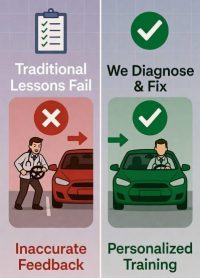

Able to Respond is the ability to respond to what’s happening around you while keeping full focus on driving safely, staying on your Purple Line positioning, and moving forward legally and safely — now and in the future. It’s a skill of controlling what you think about.
Two big pieces here are reasons and emotions. They overlap but you can see them as different.
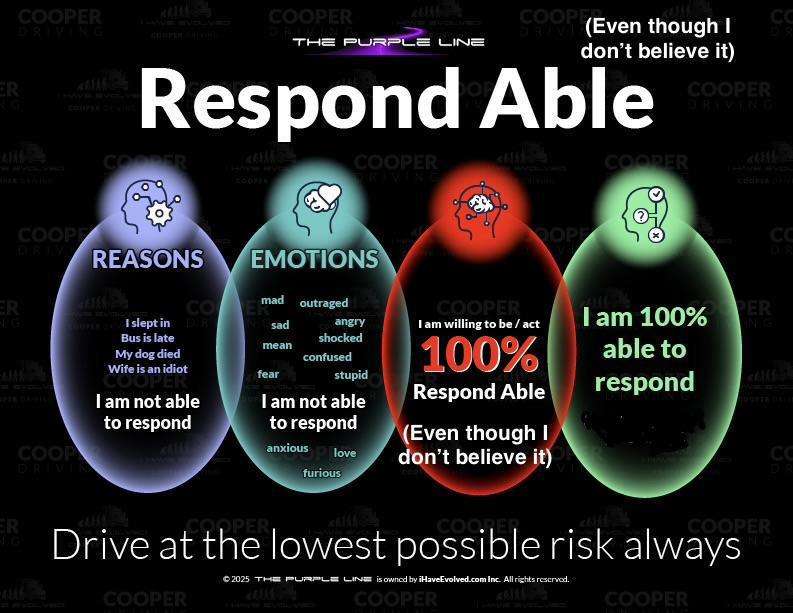
Reasons show up when I point out something — too close to the curb, touching it, close to a parked car, missed blind spot check, hands dropping — and the driver immediately launches into a long explanation or defense. They are still interacting with me, the passenger. They stay defensive, explaining why they did it, instead of dropping it and staying on the Purple Line while the car keeps moving at 60 km/h.
Emotions work the same way. Bumping the curb might be no big deal in my big Jeep, but in a low little car it feels embarrassing. The emotional kick pulls them away from the present moment. Some people even break down and cry because the emotion takes over.
The fix is to play the game: “I am able to respond to everything that comes at me right now as I drive forward. Even if I don’t fully believe I can do it yet, I’m going to drop the explanations, drop the emotional reactions, drop the social talk, and stay 100% on the task.”
This pattern often spreads beyond the instructor. A horn toot makes them instantly ask, “Are they honking at us?” Or they explain what other drivers are thinking: “That guy behind me is really mad because I’m slowing him down.”
Much of this comes from years of sitting in the car as a child listening to adults: “What is that idiot in front of us doing? Get out of the way, slowpoke.” Those voices stay loud in many clients’ heads.
This is a big challenge for many drivers. These patterns show when someone is struggling to keep the primary task of driving the car top of mind.
Supporting quotes from sources: “Mind wandering refers to the redirection of attention from driving toward self-generated thoughts that are unrelated to the driving task… these lapses in attention can impair vehicle control, delay detection of unsafe traffic conditions, and slow reactions to hazards.” (from mind-wandering while driving review) https://www.mdpi.com/2078-2489/16/8/681
“Cognitive distractions occur when a driver’s mental resources shift away from the primary driving task.” (same source)


Comments are closed