
Part 2: The “Sorry, Sorry, Sorry” Trap — Social Conversation vs Driving
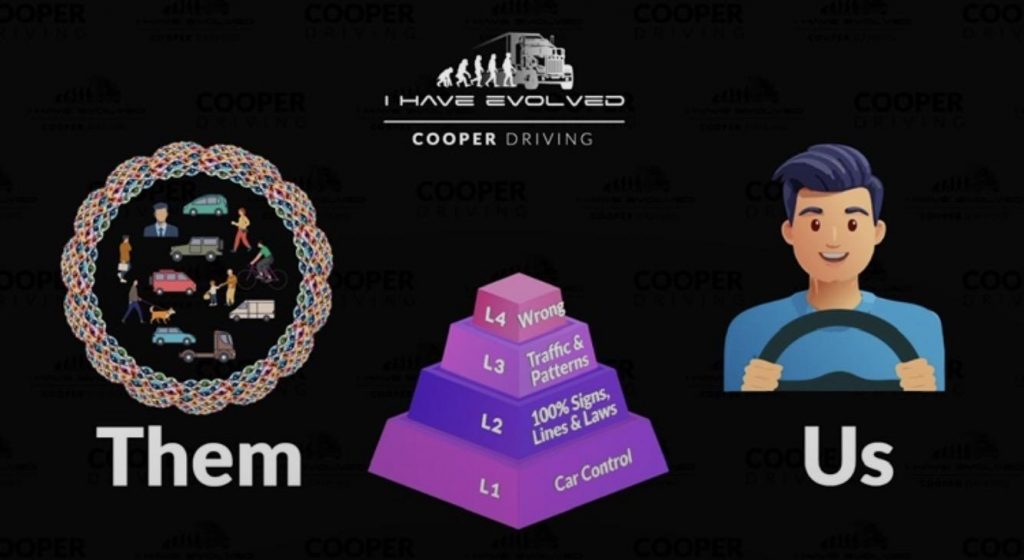
Here are two clear signs of a driver who hasn’t set up the proper priority and doesn’t yet understand the 100 Zero I talk about.
1. Able to Respond — Reasons
2. Need for Social Conversation or Interaction — “Sorry”
“Sorry, sorry, sorry, sorry.”
“Yeah, I moved over there because I saw that guy acting weird, so that’s why I adjusted.”
Words coming out of the driver’s mouth are the most direct link to their thoughts. Thoughts show what the brain and eyes are really doing.
Repeated “sorry, sorry, sorry” throughout a session means the driver is putting the passenger top of mind instead of the driving task and the Purple Line. This directly connects to the TALK IT OUT technique, which helps the driver stay 100% on the task: Purple Line, positioning, future pathway, and all the activity around them.
Many people need constant social reaction or connection to feel okay. They struggle to disconnect from that interaction. When social connection becomes the top priority in everything — walking, school, work — it’s a real skill to replace it with something more important. That’s why meditation, sports, or hobbies help: they let you refocus on a bigger task than social chatter.
A horn toot, a pedestrian waving you through, or another vehicle getting close often pulls the driver right out of their task. They shift to: “That person wants me to move,” or “The guy behind me is angry,” or “I feel bad for slowing him down.” All of these put the social response ahead of the real job — positioning the car and handling the primary task.
The TALK IT OUT technique replaces that social pull by making you both the teacher and the student. You have the conversation with yourself. As long as you keep the talk on the driving task — present, present, present to the task — you get the 100 Zero solution.
When someone buys into this, you see the shift. They might be driving through an intersection, light turning yellow, and suddenly say, “Wow, I’m so sorry, I was thinking about that guy two blocks back…” Stop. No. You’re still driving forward at 50 or 60 km/h and it’s getting busy up ahead. Your brain cannot stay two blocks in the past.
This language clearly shows when a driver is struggling to keep the primary task top of mind. That equals unsafe driving.
Supporting quotes from sources: “Passengers may be a source of distraction… interaction with passengers is one of the most frequent distracting activities undertaken by drivers and results in a ‘non-negligible’ amount of crashes.” (from meta-analysis on passenger interaction) https://www.sciencedirect.com/science/article/abs/pii/S0022437517301494
“Interacting with passengers increases risk for teenage and young adult drivers.” (from age and distraction study) https://academic.oup.com/ije/article/46/1/258/2418691


Comments are closed