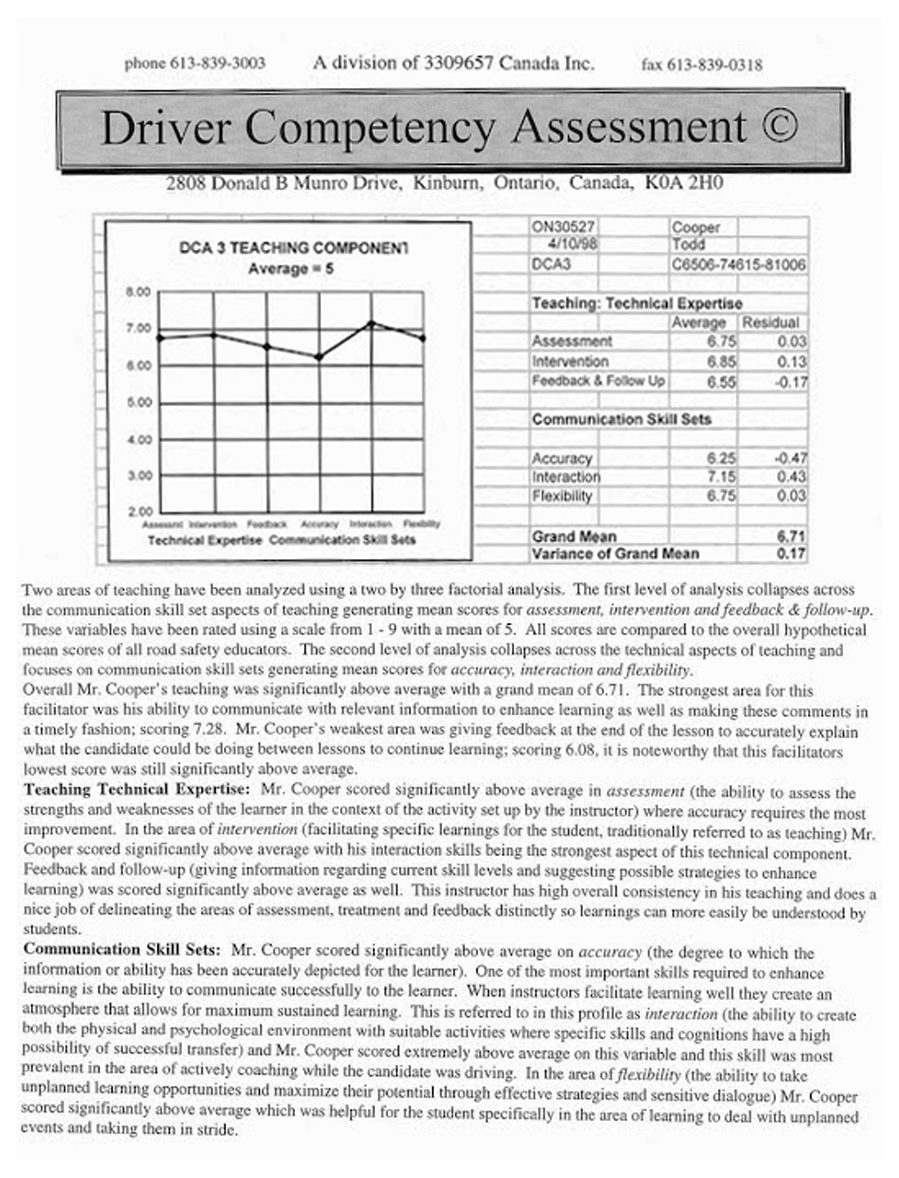
This is some of the training Cooper went thru during his time with Sue MacNeil.
Go read about
Cooper’s ban Cell Phones while driving Work.
Overview of the RSEA Driver Therapy Program
The Driving Therapy Program (sometimes called the Driving Therapist Program) from RSEA ( Road Safety Educators Association) was an advanced, specialized training for experienced road safety educators, driver trainers, and senior instructors. It focused on helping drivers overcome barriers to safe driving, especially related to trauma, anxiety, medical conditions, aging, cognitive issues, and post-crash recovery.
It was not a government-regulated or college-certified credential. Sue MacNeill ran it through RSEA, but it never received formal provincial certification. Participants who completed it often use the D.T. (Driving Therapist) designation descriptively, as seen with Ontario practitioners like Rory Hustler (designation 2001) and others.
The training targeted high-level professionals: senior driving educators, fleet trainers, instructor trainers, and those working in private/public sectors with extensive prior road safety experience.
Key Components and Courses Covered
The program combined multiple modules and studies. Common topics listed by completers include:
- Core Facilitation & Assessment:
- Road Safety Facilitators Course
- Driver Competency Assessment (D.C.A. Designation — noted as an industry standard)
- Facilitating Learning In-Vehicle
- Facilitating Learning of the Experienced Driver
- Decision Making & The Driving Task
- Decisions and Choices in Today’s Driving Environment
- Trauma, Anxiety & Psychological Aspects (often highlighted as a major focus):
- Trauma – Levels 1, 2, & 3 (conducted by Sue McNeil)
- Anxiety and Phobias
- Panic Attacks, Consequences and Reactive Effects
- P.T.S.D. (Post Traumatic Stress Disorder)
- Understanding Depression
- Traumatic Brain Injury
- Cognitive Stressors & Driving
- Special Populations & Medical Factors:
- The Aging Process
- Disease Effects and Driving
- Other Practical & Risk-Related Topics:
- Drinking, Drugs and Driving – Levels 1, 2, & 3
- Inattention, Multi-tasking and Motivation (including cell phones, conversation, etc.)
- Driving with Bikes (CAN-Bike)
- Advanced Driving Skills (Low Risk)
- Driving Therapist – Peer Review
- Hands-On/Supporting Skills:
- Skid School (e.g., Oakville, Ontario)
- St. John Ambulance CPR Course
Practical techniques emphasized in the therapy/rehabilitation side include:
- Panic attack & phobia management in-vehicle
- Systematic desensitization and exposure therapy (adapted for driving)
- Low-stress driving techniques
- Cognitive behavioral therapy approaches in-vehicle
- Confidence building, relaxation techniques
- Pain management while driving
- Ergonomic seating and adaptive devices
- Visual search patterns
- Defensive, cooperative, and compensatory driving skills for physical limitations
Structure of the Trauma Course (Led by Sue MacNeil)
One of the standout components was the Trauma Course:
- Designed as a practical “how-to” seminar for working with special-needs populations and interfacing with medical communities.
- Mostly theoretical (understanding issues, procedures, research materials, and how to access further info), with some hands-on days covering assessment protocols, counseling techniques, and methodologies.
- Heavy reading load — pre-course materials sent weeks in advance.
- Seminar-style: Participants focused on one population per session, conducted literature reviews, and discussed findings in class.
- Aimed at senior trainers to build familiarity with trauma/anxiety effects on driving.
Other related RSEA modules mentioned alongside it: Decision Making & The Driving Task, The Aging Process, Road Safety Facilitator’s Program, Evaluators/Assessors Training, Disease Effects and Driving, Cognitive Stressors & Driving.
Practical Notes for Your Use
- Designation: Completers (like those from 2001 onward) list “D.T. – Driving Therapist” along with the RSEA program. It’s presented as a descriptive title based on this specialized training, not a regulated health profession credential.
- Approach in Practice: Some graduates emphasize fixing foundational driving skill weaknesses first (before heavy exposure to feared situations) to reduce anxiety/stress, using a structured “skill deconstruction/reconstruction” method. They separate general life anxiety from driving-specific issues.
- No Formal Certification: Special note, RSEA under Sue MacNeill delivered high-quality, in-depth training, but it remained an association-based program without official government or regulatory college backing.
This matches the experiences of active “Driving Therapists” in Ontario who cite the same RSEA background.
Cooper was also heavily involved with the DCA work with Sue.